Someone once asked me, after we finished a conservative round of wrinkle relaxing injections to her forehead, “Can I still frown at my boss when he deserves it?” She could, and that was the point. Baby Botox, also called micro Botox, trades the frozen, too-smooth look for something quieter: softer motion, fewer etched lines, and an easy face that still moves with you. In my chair, this approach is as much about restraint as it is about technique.
What Baby Botox Actually Means
Baby Botox is not a different drug. It is the same botulinum toxin treatment used in standard cosmetic Botox injections and other neuromodulator injections like Dysport and Xeomin. The difference lies in dose and distribution. Instead of larger boluses into a few points, we use smaller units spread across more sites. Think two to six units per point rather than the classic four to ten. The goal is targeted weakening, not full paralysis, so facial expressions remain, while lines soften and future creasing slows.
Clinically, that often means lowering the total dose across a region. For example, a traditional treatment for forehead lines might be 10 to 20 units spread across five to nine injection sites. A baby Botox version might use 6 to 12 units with tighter spacing. Around the crow’s feet, you might see 4 to 8 units per side instead of 8 to 12. The ranges shift with anatomy, muscle strength, and aesthetic goals, but the guiding principle holds: use the least you need to get the specific outcome you want.
Where Micro Doses Shine
There are two situations where micro dosing earns its reputation: early prevention and animation-heavy faces. If you are seeing fine lines rather than deep wrinkles, small, frequent doses can relax habitual movement patterns before they etch into static lines. For performers, teachers, and anyone who relies on expressive communication, baby Botox keeps nuance in the face while taking the edge off creasing.
Common zones respond well to this strategy:
Forehead lines. Horizontal lines tend to form in people who recruit their frontalis muscle to compensate for heavy lids or habit. With a baby approach, we scatter very small botox near me aliquots high on the forehead and spare the lower third in those with brow ptosis risk. The aim is to avoid a heavy brow while reducing accordion-like crinkling.
Frown lines between the brows. The glabellar complex (corrugators and procerus) creates the 11s. Micro dosing here must be careful. If you under-treat, the scowl persists. If you over-treat, the area can look flat. I often start with a modest total and bring patients back at two weeks to top up if needed.
Crow’s feet at the corners of the eyes. This area reveals age and joy in equal measure. Micro doses soften the radiating lines while preserving a genuine smile. Going light in the subdermal plane also reduces the chance of a hollow look under the eyes.
Bunny lines on the nose. Small units tame delicate scrunching without a mask-like midface.
Chin dimpling. The mentalis can pebble the chin, especially when speaking. A few well-placed units smooth texture without affecting lip control.
Lip flip. A micro dose along the vermilion border allows the upper lip to evert slightly. This is not volume like fillers provide, but a subtle shape shift that can balance proportions or refine a gummy smile.
Brow lift. A feather-light injection pattern into lateral orbicularis oculi can allow the tail of the brow to lift a few millimeters, enough to open the eye without making the brow look surprised.
Neck bands. Platysmal bands can soften with neuromodulator injections, yet too much weakens neck support. Micro dosing offers a measured approach for select candidates.
Masseter and jawline. Masseter Botox is often discussed for jaw slimming and relief of jaw clenching, teeth grinding, and TMJ symptoms. While baby Botox can start the process gently, masseters are large and strong, so truly “baby” doses may be too little. Still, a conservative first session helps gauge response and avoid chewing weakness while exploring facial balancing.
Underarms, scalp, hands, and feet for excessive sweating. Medical botox treatment for hyperhidrosis usually requires robust dosing due to gland density. It is not an area where micro dosing is typically sufficient. That said, some patients prefer small test zones first to verify benefit before committing to full coverage.
How Micro Doses Work, Mechanically
All botulinum toxin formulations block acetylcholine release at the neuromuscular junction. The effect reduces muscle contraction and, in turn, the repetitive folding that drives lines. With baby Botox, the pharmacology is the same, but the lower dose per point changes the functional outcome. Instead of full denervation and a stiff muscle, you see partial weakening. The brain still signals, the muscle still fires, but it no longer bunches hard enough to create creases as easily.
This partial effect matters for dynamic areas like the periorbital zone and upper lip, where over-relaxation is easy to spot. It also matters for first timers who fear a dramatic shift. I often describe it as a dimmer switch, not an on-off button.
Will It Look Natural?
Yes, if the injector respects anatomy and dosing. The common fear, “Does Botox freeze your face?”, stems from overcorrection. With baby Botox, the target is motion with moderation: the brow can still lift, the eyes can still smile, and speech stays fluid. Most people around you will notice you look rested, not “done.”
There are limits. Deep etched lines, especially across sun-damaged or thin skin, may not fully fade with neuromodulator injections alone. In those cases, combining baby Botox with skin-directed therapies like microneedling, fractional lasers, or biostimulatory fillers can address texture and volume. Botox for wrinkles excels at preventing further creasing and softening dynamic lines; it does not replace lost collagen.
The Procedure, Step by Step
Before anything touches your skin, we talk. I study your expressions at rest and in motion, ask you to frown, squint, raise, purse, and pronounce certain words. For a first session, I prefer a conservative plan, especially in the forehead and around the mouth.
During the botox procedure, we cleanse the area and sometimes mark points. Most baby Botox treatments use a 30- or 32-gauge needle, just long enough to sit intramuscular or subdermal depending on the target. The injections feel like quick pinches. I keep the needle angle shallow in areas prone to diffusion into unwanted muscles, like near the levator palpebrae, to reduce the risk of eyelid ptosis. If you bruise easily, a cold compress after each pass can help.
Expect the treatment time to be brief. A standard baby Botox session for the upper face takes 10 to 20 minutes. You walk out without bandages.
What to Expect After
Results do not show up instantly. The first changes usually appear in 2 to 4 days, with full effect around day 10 to 14. With micro doses, the onset is similar, but the effect feels lighter as it builds.
Right after, tiny blebs or pinprick marks can appear and fade within an hour. Makeup can be applied after a few hours if the skin is intact. I advise patients to avoid heavy workouts, saunas, and face-down massages for the rest of the day. Keep your head up, skip hat bands that press deeply on the treated area, and do not rub vigorously. Beyond that, live normally.
Side effects track with standard botox therapy but are less likely at low doses. The most common is mild headache or a small bruise. Rare issues include eyelid or brow ptosis, asymmetry, or a heavy feel if the brow was overtreated. If something looks or feels off, we check it at the two-week mark, when adjustment becomes accurate.
How Long It Lasts, and How Often to Return
Micro dosing typically shortens longevity. While standard dosing might last 3 to 4 months in the forehead or crow’s feet, baby Botox often settles into a 2 to 3 month cycle. On very active individuals or those with faster metabolism, results can ebb closer to 6 to 10 weeks. If you plan for events, schedule treatments 2 to 3 weeks ahead so you are in the sweet spot when photos happen.
Can Botox wear off faster than expected? Yes. Heavy workouts, high baseline muscle mass, and expressive habits can shorten duration. Some patients gradually lengthen the interval by sticking with consistent appointments for a few rounds. Others prefer a steady 10-week rhythm that keeps things natural. There is no single correct answer, only the cycle that fits your goals and budget.
Safety Over the Long Term
Is Botox safe long term? Used properly, neuromodulator injections have an excellent safety profile. The doses used cosmetically, especially micro doses, are tiny compared to therapeutic levels used for medical indications like migraines, limb spasticity, or severe hyperhidrosis. The most meaningful long-term concern is the potential development of neutralizing antibodies, which can reduce effectiveness. The risk rises with high total doses and very frequent treatments. Baby Botox, by design, uses less product, which may reduce that risk. Still, spacing treatments at least every two to three https://www.instagram.com/alluremedicals/ months and avoiding unnecessary touch-ups keeps exposure reasonable.
Who Makes a Good Candidate
Baby Botox suits patients who want subtlety and control. If your main concerns are fine lines, early creasing, or you want to try preventative botox without committing to a dramatic change, micro dosing aligns well. It is also a smart entry for botox for first timers and botox for men who often prefer undetectable results.
There are scenarios where it is not ideal. Deep static wrinkles, significant brow heaviness, or pronounced neck bands may need standard dosing or combination therapies. In masseter hypertrophy, very small doses might not provide relief for jaw clenching or teeth grinding. For medical botox treatment like chronic migraines or severe underarm sweating, evidence-based dosing protocols should guide care rather than a baby approach.
Certain conditions call for postponement: pregnancy and breastfeeding are standard exclusions, as are active infections in the treatment area and specific neuromuscular disorders. If you have a history of keloids, bleeding disorders, or are on strong anticoagulants, the risks and modifications need a frank discussion.
The Consultation Details That Matter
The difference between natural and odd often lies in small clinical choices. Before injecting, I look for brow dominance. If the frontalis is doing extra work to lift a heavy brow or compensate for eyelid skin, aggressive forehead dosing can drop the brow and narrow the eyes. In that case, decreasing forehead units and using a modest botox brow lift pattern laterally can balance lift without heaviness.
I also assess the habitual movement patterns. Some people overuse their corrugators when they concentrate, creating sharp 11s. Others smile more with their eyes than their mouth, deepening crow’s feet early. We treat the habit, not just the line. This might mean targeted micro doses in a few spots rather than a blanket map.
For lip flips and gummy smiles, millimeters matter. A unit or two placed too low can blur enunciation. A unit too high does little. I have patients say certain words during mapping to gauge perioral function. The aim is a refined smile, not altered speech.
Baby Botox vs Fillers, and Choosing the Right Tool
Botox vs fillers is not a rivalry, it is a division of labor. Botox softens muscle-driven lines and can influence shape through selective relaxation. Fillers add volume, structure, and skin support. If a patient asks whether baby Botox can lift sagging skin, the honest answer is limited. Neuromodulators can create the illusion of lift by decreasing downward pull in select muscles, but they do not replace collagen or fat. For etched smoker’s lines, a small amount of filler or laser resurfacing often pairs better with micro Botox than either alone.
For masseter botox, if the goal is jaw slimming or relief for TMJ symptoms, I start with conservative dosing but warn that real contouring usually requires standard or higher units, repeated over months. For botox under eyes, I tread carefully: the risk of a hollow or heavy look is higher. Micro dosing is the only approach I consider there, often combined with skin boosters or energy devices for texture.
Can Preventative Botox Work?
Is preventative botox effective? It can be, especially for people in their late twenties to mid-thirties who see early lines with strong expressions. You are not trying to erase something that is etched; you are teaching muscles to back off enough that the skin creases less. The payoff is slower progression into deep wrinkles. It is not mandatory at a certain age. The better question is: do you see creases that persist after expression, and do you want to slow them? When those answers are yes, prevention makes sense.
What age should you start botox? There is no fixed number. I have treated 24-year-olds with aggressive frown lines from screen concentration and 40-year-olds with barely any lines thanks to genetics and diligent sunscreen. Start based on your anatomy, not your birth year.
Product Nuances: Botox, Dysport, Xeomin
The difference between Botox and Dysport, or botox vs Xeomin, is often subtle in practice. Dysport can diffuse a bit more, which some injectors like in broader areas like the forehead or masseter. Xeomin has no accessory proteins, which theoretically lowers antibody risk in high-exposure settings. Units are not interchangeable. Your injector’s familiarity with reconstitution and mapping often matters more than the label. For baby Botox, I pick a product based on the zone and your previous response, then adjust dose and spacing to your goals.
Side Effects, Rare Events, and How We Reduce Risk
Botox side effects explained simply: tiny bruises, brief soreness, a headache that resolves within a day or two, and temporary asymmetry if the pattern needs fine tuning. The dramatic stories usually involve diffusion into an unintended muscle, like an eyelid droop after glabellar treatment. To prevent this, we avoid too-low injections near the orbital rim, use micro doses with careful depth, and steer clear of rubbing and hot yoga right after.
Allergic reactions are rare. Infection is very rare with proper skin prep. If a result looks uneven at day 14, micro top-ups can balance it. If you feel over-relaxed in a zone, time remains your friend; the effect wears off. For patients who report that results fade quickly, we check dilution, units, and interval. Sometimes the fix is straightforward: a couple more units or a different mapping beats chasing the clock with early repeats.
" width="560" height="315" style="border: none;" allowfullscreen="" >
Can Botox Stop Working?
Why does botox stop working for some people? True resistance from neutralizing antibodies is uncommon in cosmetic doses, but it can happen, especially after high-dose therapeutic use. More often, the issue is not resistance, but under-dosing, improper placement, or unrealistic expectations in heavy muscle groups. If you see fading at six weeks consistently, either increase units modestly, switch to a different neuromodulator, or adjust the zone to focus on the muscle segments driving the lines. I also ask about supplements or medications that might affect bruising and inflammation, though they do not typically change duration.
How to Make Results Last Longer
Skin health supports longevity. Hydrated skin with robust collagen bends and releases rather than creasing hard. Daily sunscreen, a retinoid suited to your tolerance, and enough protein in your diet are not glamorous tips, but they matter. Avoid smoking, manage stress where you can, and space your treatments to maintain a steady suppression of overactive muscles without bouncing between extremes. For frequent frowners, simple behavioral tricks help: during deep work sessions, lift your screen, relax your brow, and check your expression every hour. It sounds trivial, yet it reduces the constant trigger that drives 11s.
A Note on Men and Natural Outcomes
Botox for men works best when it respects thicker skin and stronger muscles. Male brows sit lower; heavy forehead dosing can feminize the arch. Men also frown more strongly, so the glabellar complex often needs a tad more even in a baby pattern. We keep lateral brow lift minimal to avoid an arched look, and we pace the adjustments over two visits for control. The result reads as “rested,” not “done,” which is the brief most men bring to the consult.
When Micro Doses Are Not Enough
There are times I recommend against baby Botox:
- Deep static furrows that persist at rest and cut across thin skin. Here the anchor is structural, not just muscular. Combine standard dosing with resurfacing and, if appropriate, a small amount of filler. Pronounced platysmal bands that tether the neck. Micro doses may underperform; a full treatment plan or surgical options might be better. Significant masseter hypertrophy with jaw pain. Start conservatively but expect to step up to therapeutic ranges to relax the muscle enough for relief. Severe hyperhidrosis of underarms, hands, or feet. Evidence-based dosing that targets sweat glands requires higher totals to be meaningful. Asymmetric facial nerve function where compensations are strong. Precision dosing is possible, but ultra-light dosing can reveal asymmetry rather than smooth it.
Practical Cost and Scheduling
Micro dosing often costs less per session than a full dose, but not always. The appointment still requires expertise, mapping, and time. Some clinics price per unit, others per area. If budget is a constraint, prioritize the zone that bothers you most. For many, that is the glabella or crow’s feet. For those on camera, the forehead’s midline often leads. Schedule follow-ups at two weeks for your first baby Botox treatment. Once you find the pattern, you can move to a 10 to 12 week rhythm without a check unless you want adjustments.
What a Good Before and After Looks Like
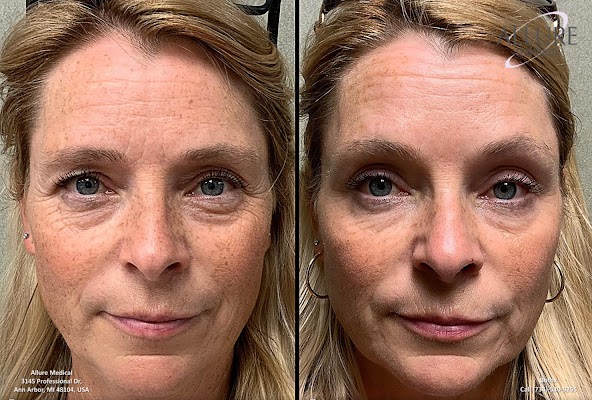
The best botox before and after results with micro doses do not scream transformation. The brow rests slightly smoother, the crow’s feet fade a notch, and the 11s soften even when you concentrate. At rest, the skin looks fresher. In motion, you still recognize your expression. Friends comment that you look like you slept well. In photos, the flash does not catch deep creases. If someone can point and say, “You had Botox,” the dose or pattern might be too strong for your goal.
Frequently Asked Micro Questions
Can botox look natural? Yes, especially when the dose respects your anatomy and expression patterns.
Can botox prevent wrinkles? It slows their formation by reducing repetitive folding. It works best paired with sun protection and skin health.
Does botox help acne? Not directly. Some patients notice less oiliness with micro botox in the T-zone, but acne management still leans on skincare and, if needed, medication.
Can botox change face shape? Yes, primarily by relaxing muscles that add bulk, like the masseter. Micro doses can start the process, but meaningful slimming usually needs standard dosing.
What to expect after botox? Mild redness, small bumps that settle quickly, results building over two weeks, and a check-in for fine tuning if needed.
Botox recovery timeline? Minutes to hours for injection marks, two to four days to begin seeing change, 10 to 14 days to peak, then a gentle fade over 6 to 12 weeks for micro dosing.
A Small Case Study From Practice
A 31-year-old attorney with early forehead lines and sharp 11s came in before a media appearance. She feared the “frozen anchorwoman” look. We planned baby Botox: 8 units across the upper forehead in six points, 10 units in the glabella complex across five classic points, and 6 units per side for crow’s feet distributed at three shallow points. At day 12, her brows lifted just enough, the 11s softened but still moved when she frowned, and her smile lines read as friendly rather than crinkled. She returned at 10 weeks for a light touch-up, preferring the steady softening over a longer but stronger result.
The Bottom Line for Decision-Makers
Baby Botox is a dosing philosophy, not a brand. It suits people who want subtle control over lines, maintain natural expression, and value incremental changes. It works best for fine lines, early prevention, and expression-heavy zones, and it requires an injector who understands both facial anatomy and restraint. If you think in terms of calibrating, not erasing, you are in the right mindset.
For your first appointment, come with specific priorities. If your frown lines bother you when you see yourself on video calls, say so. If your smile looks crinkly in photos, point to the crow’s feet. If chewing gum makes your jaw sore, discuss masseter botox for muscle tension and facial pain relief. Clear goals guide precise dosing.
Good work with micro Botox feels like cheating the clock a little, not fighting your face. When you catch your reflection looking rested, and no one can quite say why, the dose was right.